
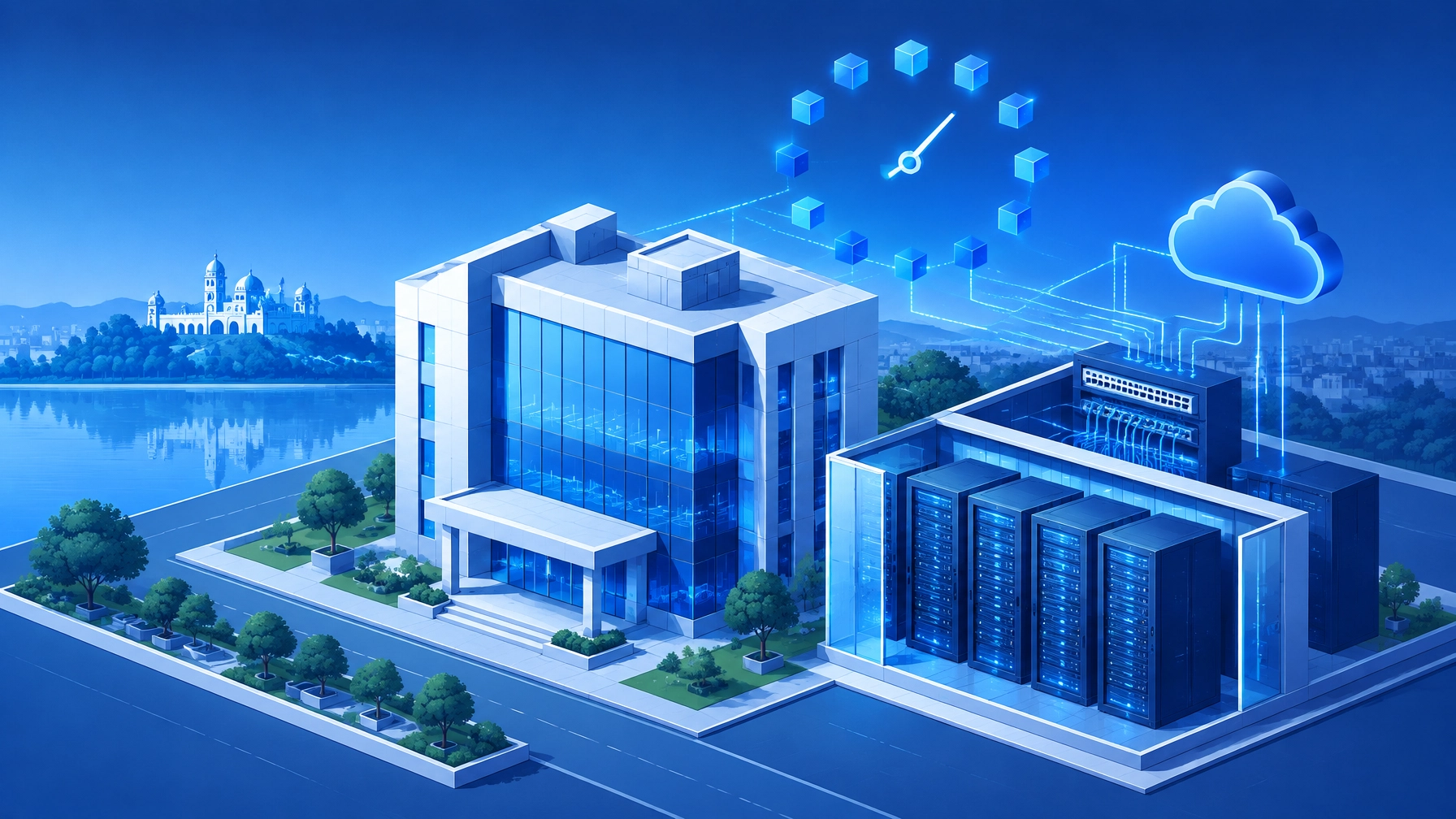
The Refresh Cycle in Bhopal: Planning IT Infrastructure Replacement Before Age Forces the Decision

Enterprise estates do not collapse all at once. They degrade at the edges, one expired certificate, one end-of-support appliance, one battery that no longer holds, until a routine event becomes an outage. The risk is not simply that equipment gets old. It is that its support, capacity, physical surroundings and operating knowledge can become inadequate at different times.
Ageing Infrastructure Rarely Fails All at Once
A refresh planned after a visible failure is often more expensive and disruptive than a planned replacement. Emergency procurement narrows choices, migration windows become harder to find, and teams have less time to test dependencies.
The practical response is to track the lifecycle signals before they become incidents. A switch may still pass traffic while its support ends; a server may appear healthy while storage or power headroom is nearly exhausted. These signals form four clocks that help CIOs, IT managers and finance heads set priorities.
The Four Clocks Running Inside Every IT Estate

The four clocks are support lifecycle, capacity headroom, physical environment, and documentation and skills. Each moves at its own pace, but each can constrain the same service.
A refresh plan is simply a calendar for four clocks that are already running whether or not anyone is watching them. Reviewing them together helps organisations balance efficiency, security and cost-effectiveness instead of replacing equipment by age alone.
Clock One: Support Lifecycle and the Date Nobody Diarised
End-of-sale, end-of-support, last firmware date, warranty expiry and licence renewal are separate milestones. Missing one can leave a device in service without a vendor support path, a security update route or a viable renewal option.
Build an end-of-support register across network, compute, storage, security and cabling plant. Record the asset, model, location, service role, owner, support and warranty dates, firmware status, licence term and replacement dependency. Review the register on a regular schedule and flag equipment whose support ends before the next procurement and migration window.
Technology names to track may include Cisco, Fortinet, Palo Alto, Sophos, HPE, Dell, IBM, VMware, Microsoft and Aruba. Technology brands are supplied and integrated per project specifications and are not claims of verified partnership or authorisation.
Clock Two: Capacity Headroom and the Utilisation Trap
Capacity is more than CPU utilisation. Review WAN throughput and link utilisation, storage growth rate, virtualisation density, rack power and cooling headroom, available ports and wireless client density.
A dashboard can look healthy because it shows a current average, not the trajectory. A rising storage curve, seasonal traffic peak or new application rollout can leave only a two-quarter runway before a constraint is reached. Compare utilisation trends with approved business plans and check both normal and peak demand.
Clock Three: The Physical Environment Has a Lifespan Too

Equipment lifecycle depends on its surroundings. Batteries lose autonomy, cooling capacity can become insufficient, earthing and cable plant may need attention, and rack space, humidity or water leaks can pose operational risks.
Fluke Infotech is an authorised distributor of AKCP data centre monitoring products, software and sensors in India. The sensor ecosystem includes temperature, humidity, water leakage and rope water sensors; airflow, air pressure and thermal map sensors; UPS, battery and battery-terminal temperature monitoring; generator and fuel monitoring; AC and DC voltage, inline power, vibration, dry contact, RFID cabinet lock, security and motion sensors, tank depth, glycol temperature for medical refrigeration, and NIST wireless temperature sensors and data loggers. See AKCP products.
These monitoring options can be considered for data centres, network, server, UPS and ATM rooms; banks, airports and hospitals; cold storage, greenhouses and HVAC; telecom BTS sites; vaccine and pharmaceutical storage, laboratories and blood banks; remote solar and generator monitoring; warehouses and manufacturing plants. Fit the sensors and alerting approach to the room, equipment and operating requirements.
Clock Four: Documentation and Skills Also Expire
The engineer who built the network may leave. As-built drawings can become stale, configuration knowledge can sit with one person, and a vendor contact list can lose accuracy. That knowledge gap increases the time and risk involved in a change or recovery.
Documentation is an asset with a shelf life. Maintain current diagrams, configurations, access procedures, dependencies, escalation contacts and recovery instructions. Assign ownership and include documentation updates in change acceptance, not as optional work after a project.
Connect With Fluke Infotech
Contact: Contact Fluke Infotech
📝 Contact Form: https://www.flukeinfotech.com/contact/
📞 Phone: +91 9966994420
📧 Email: sales@flukeinfotech.com
🌐 Website: www.flukeinfotech.com
Building the Replacement Register

Start with an inventory of what exists, then attach support and warranty dates, utilisation, criticality and dependencies. Sort the register by the earliest material risk, not by the most visible equipment or the newest purchase request.
For each asset, capture its identifier, location, owner, function, vendor and model, support milestones, licence term, capacity trend, business services supported, dependencies, recovery requirements and proposed action date. A register covering networking, wireless, servers, storage, data centres, firewalls, cybersecurity and structured cabling gives finance and IT a shared basis for sequencing investment, and it is the working document most organisations need before they evaluate IT infrastructure solutions in any detail.
Scoring Criticality: What Justifies Replacing Something Early
Pull a replacement forward when there is regulatory exposure, a single point of failure, no vendor support path, a security patch gap, an unacceptable recovery time, a critical business dependency or a physical risk.
There are also sound reasons to leave equipment in place longer. If it remains supported, secure, adequately sized, documented and maintainable, and a replacement would add no meaningful business benefit, continued use may be reasonable. Record the decision, controls and next review date so deferral is managed rather than forgotten.
Architectures That Survive Two Refresh Cycles

A resilient design separates what changes frequently from what should remain stable. An SD-WAN overlay can decouple policy from transport providers; Cisco Viptela, VMware SD-WAN, Silver Peak and Fortinet Secure SD-WAN are technology brands to evaluate against the existing estate. See SD-WAN solutions.
Virtualisation and server consolidation, including VMware and Microsoft Hyper-V environments, can reduce hardware sprawl when application dependencies and recovery needs are understood. Flash-based storage can reset the performance and footprint question. Standardised structured cabling can allow a cabling refresh without disturbing the logical network; review the data centre and structured cabling solutions. As a structured cabling solution provider, we prefer to be involved before the physical plan is fixed, because channel design decides how much of the cabling can survive the next equipment generation.
Fluke Infotech’s core work is IT infrastructure: networking and wireless, servers, storage, data centres, firewalls and cybersecurity, structured cabling, unified communications and AV, cloud and automation, custom software, and NOC and SOC solutions. Our cybersecurity services include VAPT, SOC, NAC with Aruba ClearPass, endpoint security, DLP and incident response. The S.E.C.U.R.E. framework is Strategise, Engineer, Calibrate, Unify Intelligence, Respond and Engage. Professional services use the D.O.T. methodology: Discover, Optimise, Transform.
What to Compare Before You Standardise
Compare SD-WAN platforms such as Cisco Viptela, Fortinet Secure SD-WAN, Silver Peak/VMware and Aruba EdgeConnect by policy model, transport independence, integration with the current firewall estate and operational skills required.
Compare next-generation firewalls such as FortiGate, Palo Alto and Sophos by policy management and centralisation, throughput and inspection headroom, integrated SD-WAN and switching, and licensing predictability over the refresh term. Enterprise network security solutions are only as durable as the platforms beneath them, so the firewall estate belongs in the same register as the switches and the cabling. Compare cabling systems such as CommScope, Molex, Belden, D-Link and R&M by channel performance and test headroom, component availability, warranty and certification programmes, and contractor familiarity.
The platform that cannot be supported locally five years from now is the wrong platform regardless of its feature list.
Budget Models: Capex, Opex and Consumption
Organisations may choose an outright capital purchase with depreciation, a subscription or as-a-service model, leasing, or a hybrid approach. Each changes how cost, ownership, renewal and replacement planning are handled.
The budget model matters as much as the technology because it decides how fast the next refresh can start. Compare the lifecycle commitment and exit requirements alongside the initial purchase decision.
The Refresh Calendar: Sequencing Across Sites

Sequence a multi-location refresh by criticality first, dependency second and budget cycle third. Replacing the network edge before the core can create incompatibilities or leave the new edge dependent on an ageing foundation. Refreshing storage before the compute that drives it may also waste the investment.
Cloud automation and orchestration can make deployment repeatable rather than bespoke across sites. Put licensing, including Microsoft 365, Zoho CRM, Zoho Mail and Google Workspace, in the same register as hardware so renewal dates and dependencies are visible. Fluke Infotech’s cloud automation and orchestration work can support this planning; explore cloud solutions.
Where AI Video Analytics and the Complementary Divisions Fit

AI-based CCTV analytics, access control, fire safety, BMS, electrical and solar are complementary divisions around the IT core. Supported video analytics use cases may include visitor management, ANPR for truck movement, PPE detection, fire and smoke detection, camera tamper detection, intrusion detection, and vehicle and forklift movement. They are not guaranteed features of every camera or platform. Surveillance platforms have their own refresh clocks and share the network and storage on which they depend.
Other workplace technology includes digital signage, Fluke Infotech’s own in-house product, with Android or Windows media players and on-premise or cloud deployment. Use cases span corporate, HR, compliance, administration, manufacturing, banking, airports, hospitality, education, retail and government. Unified communications, VoIP, video and audio conferencing, interactive LED panels, boardroom systems and queue management can also be planned as part of the wider estate. Custom business application development can address specific workflows.
Five Refresh Mistakes We See
-
Refreshing the visible layer and leaving the foundation. New endpoints or displays do not resolve an unsupported core, inadequate cabling or a constrained power and cooling environment. Review dependencies before committing the spend.
-
Buying the same architecture because it is familiar. Familiarity can simplify operations, but it should not replace a review of requirements and supportability. Compare the current design with business needs and available skills.
-
Letting the licence term run longer than hardware support. A supported subscription cannot restore vendor support to an unsupported appliance. Align contract and hardware dates in the register.
-
Treating refresh as a hardware swap. Migration requires dependency checks, testing, rollback and a cutover plan. Include those tasks and owners in the project schedule.
-
Keeping no environmental record. Without room-condition and equipment evidence, nobody can establish whether the old room was healthy. Record monitoring trends and maintenance actions before and after the change.
What This Means for Bhopal Organisations
Bhopal has varied refresh realities: government and public sector offices may run long-lived estates; older facilities around BHEL and Govindpura can have shop floors that outlast the switches serving them; newer corporate floors on Hoshangabad Road and Kolar Road may be starting their first refresh cycle.
Fluke Infotech’s project delivery and service coverage areas include MP Nagar, TT Nagar, Arera Colony, New Market, BHEL area, Govindpura Industrial Area, Mandideep, Koh-e-Fiza, Airport Road, Ashoka Garden, Bairagarh, Hoshangabad Road, Kolar Road, Bawadia Kalan, Karond, Ayodhya Bypass, Misrod and Bagh Sewania. Bhopal is a project delivery and service coverage location, not a confirmed physical branch.
Headquartered in Indore. Delivering Technology & Infrastructure Solutions Across India.
We are established in 2013, ISO 9001 certified, and registered with MoC, GeM and MSME. Our system integration services are planned to suit site readiness and scope; rapid installation within three hours is possible where the site is prepared. Our managed IT services cover preventive maintenance, monitoring and lifecycle tracking where contracted, and support is 24×7 only where contractually provided. Our services also include data centre design, migration and maintenance contracts. View our certification information and company profile.
Inside Fluke Infotech: Nisha Chauhan on Support That Outlasts the Sale

Nisha Chauhan founded Fluke Infotech in Indore in 2013. She is India's first woman CCIE Lab Certified and holds RHCSA and AWS certifications. She is also Managing Director of Itrainu. Her stated priority is after-sales support.
That priority is closely linked to lifecycle planning: a refresh plan is only as good as the support discipline that keeps the estate alive between refreshes. A sound plan includes follow-through, current documentation and clear ownership after installation.
Talk to Fluke Infotech
A refresh assessment can help identify lifecycle dates, capacity constraints, environmental risks and dependencies before they determine the schedule for you. Contact Fluke Infotech to request an infrastructure assessment for your Bhopal organisation.
#systems #business #technology #design #system #engineering #automation #innovation #productivity #businesssystems #entrepreneur #software #systemsthinking #solutions #softwares #industry #installation #security #businessdevelopment #routing #switching #cisco #firewall #paloalto #fortigate #fortinet #hp #aruba #cabling #datacentre #akcp #indore #Bhopal #India #cio #cto #itmanager #networkengineer #cloud #aws #best #intigrator #IT #vendor #provider #cctv #server #storage #project #itsm #itil #network #networking #itsecurity #digitalsigange #Bhopal #Raipur #Mumbai #NaviMumbai #Thane #Noida #Gurugram #Vashi #Andheri #Pithampur #VijayNagarIndore #Satna #Katni #Meghnagar #Mandideep #Dewas #SuperCorridorIndore #Jabalpur #GovindpuraBhopal #Gwalior #SanwerRoadIndore #Nasik #Nagpur #Dhar #Dhule #Pune #Jewar #GiftCity #Ahmedabad #Vadodara #Surat #Silvassa #Dholera #Dahod #Rajkot #Kolkata #Durgapur #Bhubaneshwar #Ranchi #Jamshedpur #Delhi #Hyderabad #Goa #Jaipur #Vapi #Lucknow #GreaterNoida #NewDelhi #Coimbatore #Chennai #Bengaluru #Gachibowli #Ameerpet #Vijayawada #Sholapur #Kolhapur #Gorakhpur #Sagar #Mohali #Chandigarh #Jodhpur #Patna #Gurgaon #Gandhinagar #Dehradun #GeetaBhawanIndore #ElectronicCity #Marathahalli #Jayanagar #Wakad #Hinjewadi #KarveNagar #CyberCity #DLF #HitechCity #Madhapur #Kondapur #Magarpatta #Kharadi #Aundh #Baner #Bandra #Airoli #Sholinganallur #Perungudi #BKC #Parel #Mahim #Borivali #NehruPalace #Satellite #SaltLakeCity #Newtown #Rajarhat #RajivGandhiTechnologyPark #ITPark #Whitefield #Koramangala #Sarjapur #Manipur #Bhadrak #Kurla #Indore #refreshplanning #lifecyclemanagement #TCO #assetmanagement #bhopalbusiness


