
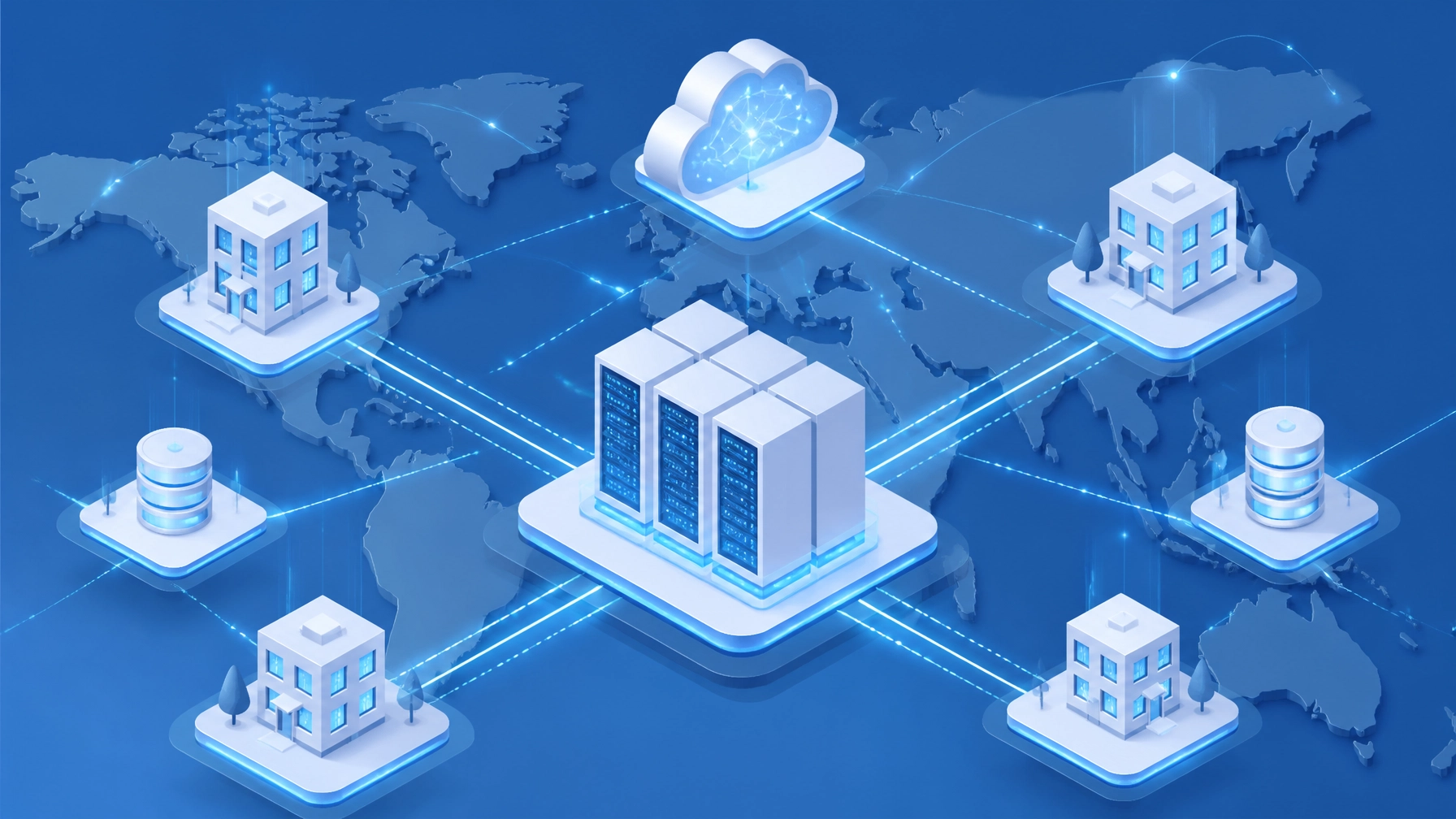
SD-WAN vs. SASE: The 2026 Comparison Your Network Strategy Needs

Too much information can be a dangerous thing for a CIO. In 2026, the jargon-heavy landscape of networking and security has reached a fever pitch. If you’re currently caught between modernizing your wide-area network or overhauling your entire security perimeter, you aren’t alone. The debate is no longer about whether to move to the cloud, but how to do it without leaving your front door wide open.
At Fluke Infotech, we’ve seen the evolution of IT infrastructure solutions in India firsthand. From managing complex deployments for industry giants like UltraTech Cement to providing SD-WAN implementation for distributed enterprises, we know that the choice between SD-WAN and SASE isn’t just a technical one: it’s a strategic pivot for your business.
Defining the Contenders: SD-WAN vs. SASE
To choose the right path, we must first define the terms. In 2026, the boundaries have blurred, but the core functions remain distinct.
What is SD-WAN?
SD-WAN (Software-Defined Wide Area Network) is a connectivity fabric that decouples network hardware from its control mechanism. It optimizes traffic across multiple transports: such as MPLS, LTE/5G, and broadband: using application-aware routing. Its primary mission is performance and cost efficiency.
What is SASE?
SASE (Secure Access Service Edge) is a converged cloud-delivered platform that integrates SD-WAN capabilities with advanced security functions. It combines networking with Zero Trust Network Access (ZTNA), Cloud Access Security Broker (CASB), Secure Web Gateway (SWG), and Firewall-as-a-Service (FWaaS). If SD-WAN is the engine, SASE is the entire armored vehicle.

The 2026 Reality: Why Convergence is Non-Negotiable
By the end of 2026, industry data suggests that approximately 60% of SD-WAN deployments will be integrated into a SASE framework. The "standalone" era is fading. Why? Because the modern enterprise is no longer a collection of static offices; it is a fluid network of remote workers, cloud workloads, and high-tech manufacturing plants.
For a manufacturing giant like UltraTech Cement, networking isn't just about sending emails. It’s about the backbone that supports:
- AI-based Visitor Management at the main security gates.
- ANPR CCTV solutions for monitoring trucks and automatic boom barriers.
- Advanced AI-based analytics for PPE kit compliance, fire detection, and intrusion monitoring.
Without a robust, secure network, these "Smart Plant" initiatives crumble.
A Side-by-Side Comparison
| Feature | SD-WAN | SASE |
|---|---|---|
| Primary Focus | Network connectivity and performance. | Integrated network + security. |
| Security Model | Often relies on third-party firewalls. | Native Zero Trust architecture. |
| User Experience | Site-to-site optimization. | User-to-application optimization (anywhere). |
| Implementation | Appliance-heavy (physical or virtual). | Cloud-native service edge. |
| Ideal For | MPLS offloading and branch connectivity. | Hybrid work, cloud-first, and VPN replacement. |

The CIO’s Decision Matrix: Which One Do You Need?
Choosing between these two isn't about which is "better": it's about where your organization sits on the digital maturity curve.
1. The Site-Centric Enterprise
If your operations are primarily site-based (like a cement plant or a large manufacturing unit) and you already have a significant investment in hardware firewalls, starting with SD-WAN is a logical move. We specialize in implementing solutions from leaders like Cisco (Viptela), Fortinet, VMware, and Silver Peak.
In this scenario, SD-WAN provides the "Structure Cabling" for your data flows, ensuring that your Structure Cabling Solution provider can deliver high-speed, reliable connectivity across the plant floor.
2. The Cloud-First, Distributed Organization
If your workforce is 50% remote and your applications live in the cloud, SASE is your target. SASE eliminates the need to backhaul traffic to a central data center for security inspection, significantly reducing latency and improving the user experience.
3. The Hybrid Approach (The "Fluke Way")
Most Indian enterprises fall somewhere in between. We often recommend a phased approach:
- Phase 1: Modernize the WAN with SD-WAN to gain control and visibility.
- Phase 2: Layer on cloud-delivered security (SASE) as legacy contracts for firewalls and VPNs expire.
Beyond Connectivity: Supporting the Industrial Edge
At Fluke Infotech, our expertise extends beyond the router. Supporting a plant like UltraTech involves a comprehensive IT ecosystem. Our solutions for the cement and manufacturing industries include:
- Security & Monitoring: AI-based CCTV for fire/smoke detection and camera tamper detection.
- Environmental Compliance: Outdoor LED screens for monitoring environment statistics to meet government regulatory purposes.
- Network Infrastructure: High-performance routers and switches from Cisco, HP Aruba, and D-Link.
- Data Center Excellence: Designing and implementing data centers tailored for manufacturing environments, including AKCP Data Center Monitoring.
- Collaboration: Conference room solutions using LED interactive panels for seamless board meetings.

Why Fluke Infotech?
As a certified ISO 9001 IT System Integrator since 2013, we don’t just sell boxes; we build solutions. Whether it’s a FortiGate or Palo Alto firewall implementation or a complex backup and storage solution with Flash disk technology, we bridge the gap between business needs and technical reality.
Our presence is truly PAN India. From the industrial hubs of Pune, Indore, and Jamshedpur to the corporate corridors of Noida, Gurugram, Mumbai, and Bengaluru, we are where you are. We serve sectors ranging from Telecom and Pharma to Oil & Gas and Government departments.
Our Partners
We leverage strategic partnerships with the world's leading technology providers to ensure your infrastructure is future-proof:
- Networking: Cisco, Juniper, HP Aruba.
- Security: Fortinet, Sophos, Palo Alto, Trend Micro.
- Compute & Storage: IBM, HP, Oracle, Microsoft.
Conclusion
In 2026, your network strategy shouldn't be a choice between performance and security. It should be a unified vision. SD-WAN provides the flexibility your infrastructure needs today, while SASE provides the security framework your business needs for tomorrow.
Ready to optimize your network? Whether you need a simple Structure Cabling Solution or a full-scale SD-WAN implementation, Fluke Infotech is your premier partner in India.
Contact Us Today
Experience the Fluke Infotech advantage. Our experts are ready to help you navigate the complexities of 2026’s IT landscape.
???? Phone: +91 9966994420
???? Email: sales@flukeinfotech.com
???? Website: www.flukeinfotech.com
???? Contact Form: Fill out our form
Follow Our Journey:
Resources: