
10 Reasons Your Network Security Isn’t Working: And Why an Indian Managed SOC is the Answer

"Too much information" is the quietest way a network fails. In many modern Indian enterprises, the sheer volume of logs, alerts, and "blinky lights" creates a facade of safety that masks underlying vulnerabilities. Many organizations treat cybersecurity as a static installation: a "set it and forget it" hardware purchase rather than a dynamic operational process.
At Fluke Infotech, we observe that the most robust firewall or the most expensive SD-WAN implementation is rendered useless if the operational layer beneath it is fragmented. True network resilience requires more than tools; it requires a centralized, 24/7 intelligence layer.
The Operational Gaps: Why Your Current Security Strategy is Falling Short
Despite significant investments in IT infrastructure solutions in India, data breaches continue to rise. This paradox exists because security is often treated as a peripheral IT task rather than a core business risk. Below are ten specific reasons why traditional network security architectures are failing to protect the modern enterprise.
1. Perimeter-Only Obsession
Perimeter security is a legacy mindset that assumes threats only originate from the outside. While firewalls are essential, they are blind to insider threats, compromised remote credentials, and lateral movement once a breach occurs. Modern security must be "inside-out," focusing on identity and endpoint behavior rather than just the gateway.
2. Alert Fatigue and the "Blinky Light" Syndrome

Most security tools are designed to be noisy. When an internal IT team is bombarded with thousands of alerts daily, "alert fatigue" sets in. High-priority threats are often missed because they are buried under a mountain of false positives. Without a dedicated team to triage these signals, your security tools become expensive noise-makers.
3. Misconfigured Security Controls
A security tool is only as effective as its configuration. We frequently encounter enterprises with enterprise-grade equipment that remains at "factory default" or is misconfigured to prioritize ease-of-use over security. Improperly configured database connections and open ports are among the most common entry points for ransomware.
4. The Silo Problem: Security vs. IT
In many organizations, the security team and the IT operations team operate in silos. This lack of communication leads to gaps in patching and vulnerability management. IT infrastructure solutions in India must be integrated; a change in the network architecture, such as a new Structure Cabling Solution provider project or a cloud migration, must be mirrored by a security update.
5. Lack of 24/7/365 Eyes-on-Glass
Hackers do not work standard business hours. Most breaches occur during weekends, holidays, or late at night when internal teams are offline. If your organization lacks a dedicated 24/7 monitoring capability, a breach can persist for days or weeks before it is even detected.
6. Human Error and Shadow IT

User behavior remains the largest single point of failure. Whether it is a weak password, a phishing click, or an employee using unauthorized SaaS applications (Shadow IT), technical controls cannot fully compensate for a lack of security culture. Managed services provide the visibility to detect these anomalies in real-time.
7. Reactive vs. Risk-Based Strategy
Most Indian companies operate in a reactive mode: only addressing security after an incident occurs. A formal, risk-based strategy prioritizes the protection of the most critical business assets. At Fluke Infotech, we emphasize that security must be an ongoing governance process, not a one-time project.
8. Talent Scarcity and High Churn
Cybersecurity experts are in high demand and short supply. Small to mid-sized enterprises often find it impossible to hire and retain a full-time team of specialized security analysts. This leads to a "brain drain" where the person who understands the security configuration leaves the company, taking critical knowledge with them.
9. Legacy Infrastructure and the SD-WAN Gap
As businesses transition to hybrid work, legacy MPLS networks are being replaced. However, without a proper SD-WAN implementation that includes integrated security (SASE), organizations often create new vulnerabilities at the branch level. A Managed SOC ensures that these distributed branch offices are as secure as the head office.
10. Compliance-First, Security-Second
Many organizations design their security programs to pass audits rather than to stop hackers. While compliance with standards like ISO 9001 or RBI guidelines is necessary, it is not a substitute for active threat hunting. Compliance is a baseline; security is a continuous pursuit.
What is a Managed SOC?
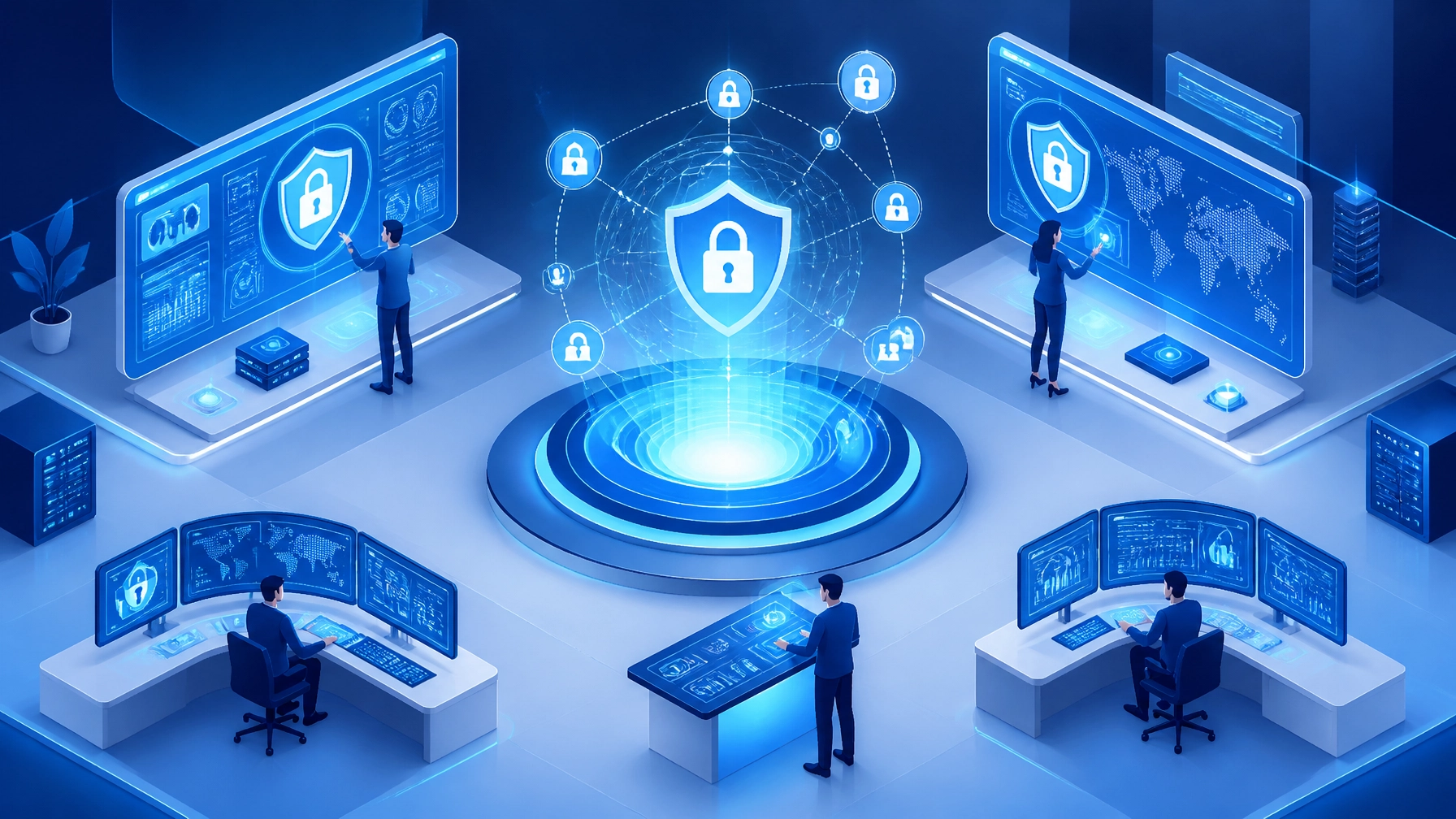
A Managed Security Operations Center (SOC) is a centralized service that provides 24/7 monitoring, detection, and response across an organization’s entire digital estate. It is a "Security-as-a-Service" model that combines advanced AI-driven tooling with human expertise to identify and neutralize threats in real-time.
A Managed SOC is not just a helpdesk; it is a specialized command center that utilizes Security Information and Event Management (SIEM) tools to correlate data from your network, endpoints, and cloud environments to spot patterns that indicate an attack.
Why an Indian Managed SOC is the Answer

For Indian enterprises, the benefits of partnering with a local Managed SOC provider like Fluke Infotech are both technical and economic.
- Cost Efficiency: Building an in-house SOC requires a capital-intensive investment in software licenses and 24/7 staffing. A managed model converts these costs into a predictable operating expense.
- Access to Global Intelligence: Managed SOC providers handle multiple clients, allowing them to apply lessons learned from one attack to protect all other clients simultaneously.
- Regulatory Familiarity: An Indian SOC provider understands local regulations such as the DPDP Act, CERT-In directions, and sector-specific mandates from the RBI or SEBI.
- Rapid Scaling: Whether you are expanding your physical footprint with a new Structure Cabling Solution provider or migrating to the cloud, a Managed SOC scales with you without the need for additional hiring.
Fluke Infotech: Bridging Business Needs with Security Excellence

Fluke Infotech is a certified ISO 9001 IT System Integrator that has been delivering comprehensive IT infrastructure solutions in India since 2013. We don't just sell software; we provide a robust security partnership that protects your business from the inside out.
Our security philosophy is built on three pillars:
- Visibility: We provide a single pane of glass to monitor your entire network, from the data center to the remote endpoint.
- Expertise: Our team leverages strategic partnerships with industry leaders like Cisco, Fortinet, and Microsoft to deliver cutting-edge threat detection.
- Responsiveness: We focus on reducing the Mean Time to Detect (MTTD) and Mean Time to Respond (MTTR), ensuring that potential breaches are contained within hours, not days.
Whether you are looking for an SD-WAN implementation to modernize your connectivity or need a comprehensive Cyber Security audit, we provide the tailored expertise required for the Indian market.
Secure Your Digital Future Today
The question is no longer if you will be targeted, but when. Relying on outdated, siloed security tools is a risk your business cannot afford.
Contact Fluke Infotech today to learn how our Managed SOC services can transform your network from a vulnerability into a competitive advantage.